Seasonal & Festive Thanksgiving Herb Stuffed Turkey
Highlighted under: Festive Joy
I absolutely adore preparing a Thanksgiving Turkey that not only brings joy to my family but also fills the room with captivating aromas. Each year, I experiment with different herb blends for the stuffing, and this year, I’ve settled on a delightful combination of sage, thyme, and rosemary that perfectly complements the rich flavor of the turkey. The result is a moist, flavorful turkey that everyone looks forward to sharing. Join me in creating this festive centerpiece that’s perfect for holiday gatherings!
I remember the first time I made a stuffed turkey; it was a blend of excitement and nervousness. As I prepped the bird with my homemade herb stuffing, the aromas of sage and thyme intoxicated the kitchen. I've learned that the secret to a moist turkey lies in not overcooking it and letting it rest after roasting. This allows the juices to redistribute, resulting in a succulent meat that you can't resist.
Each Thanksgiving, this herb-stuffed turkey becomes more than a meal; it’s a tradition that brings my family together. I often experiment with different seasonal ingredients, and this year, adding cranberries to the stuffing added a delightful pop of tartness that complemented the savory herbs. I can't wait for you to try it!
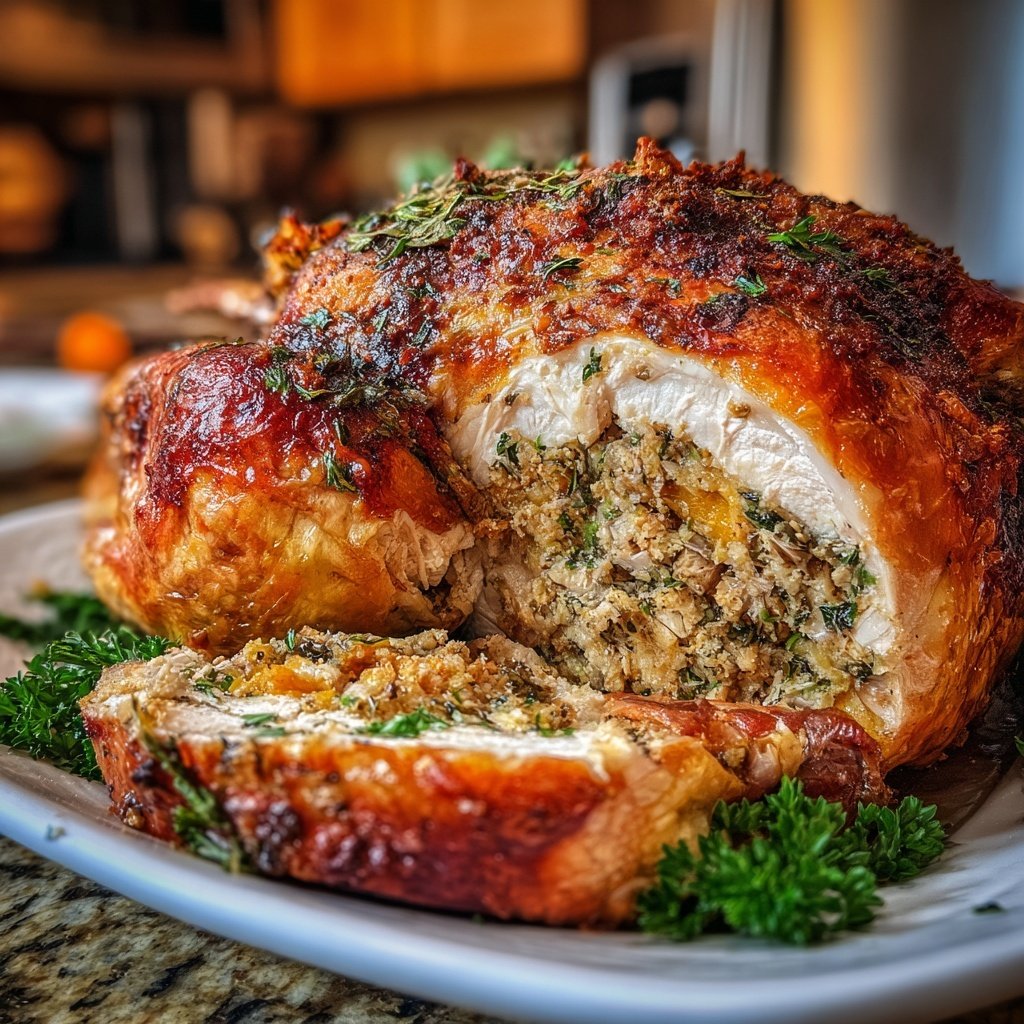
Why You'll Love This Recipe
- Savory herb stuffing that enhances the turkey's flavor
- Aromatic herbs fill your kitchen with warmth and inviting scents
- Makes for a memorable centerpiece at your holiday table
The Importance of Seasoning
Seasoning is crucial for the flavor profile of your Thanksgiving turkey. The generous application of salt and pepper on both the skin and inside the cavity enhances the overall flavor, allowing the natural richness of the turkey to shine. Make sure to use kosher salt for optimal seasoning, as its coarse texture distributes more evenly. If you're looking for an alternative, consider using a herb-infused salt or a citrus-based seasoning to add a unique twist to your turkey’s flavor.
Don't shy away from seasoning the outside of the bird liberally, as this will create a beautifully seasoned crust while the herbs in the stuffing play their essential role on the inside. By using fresh herbs like parsley, along with the dried sage, thyme, and rosemary, you ensure layers of flavor that will infuse the meat as it roasts.
Mastering the Basting Technique
Basting is a technique that can elevate your turkey by ensuring it stays moist throughout the roasting process. It's best to use the turkey’s own drippings or the chicken broth poured into the roasting pan for basting. Every 30 minutes, carefully spoon the liquid over the turkey, focusing especially on the breast, which tends to dry out. If you notice the skin getting too dark, you can cover it loosely with aluminum foil to prevent burning.
Remember, avoiding frequent oven door openings helps maintain consistent heat, so plan your basting intervals wisely. A turkey baster or a ladle will work perfectly—just aim to keep the internal temperature rising steadily, reaching that crucial 165°F mark without overcooking.
Serving and Storing Leftovers
Carving a turkey can be daunting, but with a sharp carving knife and a stable cutting board, you can create beautifully sliced pieces. Start by removing the legs and thighs, then carefully slice the breast meat, cutting against the grain for tenderness. Present the turkey on a large, festive platter for an impressive display, and don’t forget to serve the herb stuffing alongside for a true Thanksgiving feast.
If you have leftovers, allow the turkey to cool before storing it in the refrigerator within two hours. Use airtight containers to keep it fresh for up to three to four days. Leftover turkey also freezes well if wrapped tightly in plastic wrap and aluminum foil, which can last up to three months. Reheat in the oven wrapped in foil to maintain moisture, adding a bit of chicken broth to the pan to prevent drying out.
Ingredients
Gather these fresh ingredients to create your flavorful stuffing and turkey!
For the Turkey
- 1 whole turkey (12-14 pounds)
- 4 tablespoons unsalted butter, softened
- Salt and pepper to taste
- 2 cups chicken broth
For the Herb Stuffing
- 1 pound bread, cubed (preferably day-old)
- 1 cup onion, diced
- 1 cup celery, diced
- 3 cloves garlic, minced
- 1/4 cup fresh parsley, chopped
- 2 teaspoons dried sage
- 2 teaspoons dried thyme
- 1 teaspoon dried rosemary
- 1/2 cup dried cranberries (optional)
- 1/2 cup walnuts, chopped (optional)
- 1/4 cup olive oil
- 2 cups vegetable or chicken broth
You can also add other seasonal ingredients like chopped apples or nuts for extra flavor!
Instructions
Follow these steps to ensure your turkey is perfectly cooked and stuffed!
Prepare the Herb Stuffing
In a large skillet, heat olive oil over medium heat. Add diced onion and celery; sauté until soft, about 5 minutes. Stir in minced garlic, sage, thyme, rosemary, and cook for another minute. In a large bowl, combine cubed bread, sautéed vegetables, parsley, cranberries, and walnuts. Gradually mix in broth until desired moisture is reached.
Prepare the Turkey
Preheat your oven to 325°F (163°C). Pat the turkey dry with paper towels and season the cavity and skin generously with salt and pepper. Stuff the herb mixture into the turkey, gently pressing it in. Rub softened butter over the skin and pour chicken broth into the roasting pan.
Roast the Turkey
Place the turkey breast-side up on a rack in a roasting pan. Roast for approximately 3-3.5 hours, basting every 30 minutes. The turkey is ready when the internal temperature reaches 165°F (74°C).
Let It Rest
Remove the turkey from the oven and let it rest for at least 30 minutes before carving. This allows the juices to redistribute, making for a more succulent turkey.
After carving, serve with your favorite sides and enjoy the compliments!
Pro Tips
- For added moisture, consider brining the turkey overnight, and don't be shy with the herbs in your stuffing for a more robust flavor.
Enhancing Your Herb Stuffing
For the herb stuffing, consider using a mix of different types of bread for added texture and flavor. Sourdough, rye, or even cornbread can bring unique notes to your stuffing. If you want a gluten-free version, substitute regular bread with gluten-free alternatives or homemade cornbread to soak up the flavorful broth while still maintaining a delightful texture.
Fresh herbs can definitely deepen the flavor, so if you have them on hand, feel free to replace dried herbs with chopped fresh varieties. Just remember that fresh herbs have a more potent flavor, so you may want to increase the quantity slightly, adjusting to taste.
Variations to Try
While this recipe highlights traditional flavors, it's fun to experiment! Consider adding diced apples or pears to the stuffing for a hint of sweetness, or incorporate chorizo for a spicy kick. A splash of white wine can elevate the flavor of the stuffing, creating a more complex, aromatic dish that complements the turkey beautifully.
If you’re cooking for a smaller gathering, you can adapt this recipe to use a smaller bird or even a turkey breast. Adjust the cooking time accordingly, typically about 20 minutes per pound at the same temperature, checking for that essential internal temperature of 165°F.
Troubleshooting Common Issues
If you notice your turkey is browning too quickly, it may help to tent it with aluminum foil while it finishes cooking. This will slow down the browning process while keeping the moisture locked in. For dry turkey, ensuring you baste regularly and using a meat thermometer is crucial; avoid overcooking by keeping an eye on the internal temperature closely.
In case your stuffing comes out too wet or too dry, remember to adjust the amount of broth you add and the type of bread used. Day-old bread absorbs more liquid than fresh bread, which will help you achieve the perfect stuffing consistency.
Questions About Recipes
→ How do I ensure my turkey doesn't dry out?
Make sure to baste your turkey regularly while it cooks, and let it rest before carving.
→ Can I make the stuffing ahead of time?
Yes! You can prepare the stuffing a day in advance and store it in the refrigerator until you're ready to stuff the turkey.
→ What other herbs can I use for the stuffing?
Feel free to experiment with other herbs like oregano or dill to create your preferred flavor profile.
→ Is it necessary to stuff the turkey?
No, you can cook the stuffing separately in a baking dish if you prefer. Just adjust the cooking time as needed.
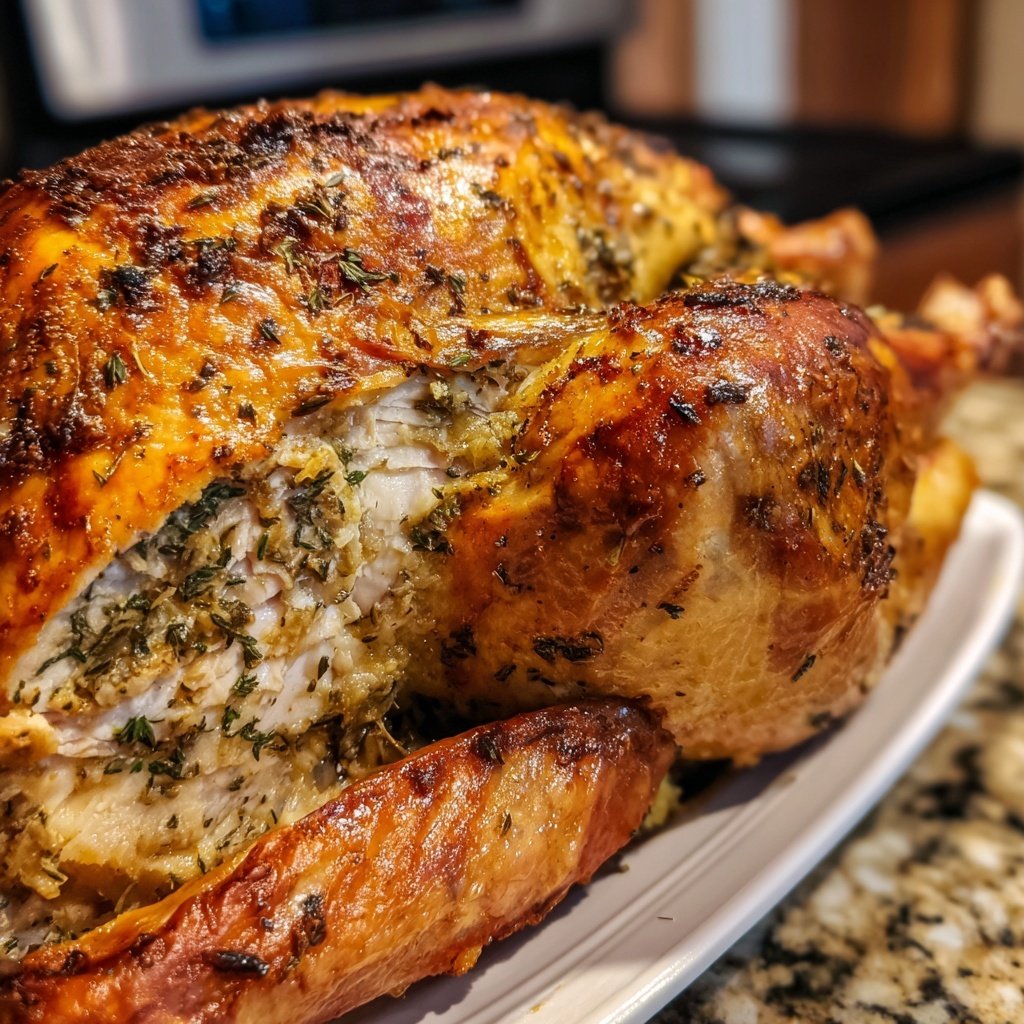
Seasonal & Festive Thanksgiving Herb Stuffed Turkey
Created by: Rowena Clarke
Recipe Type: Festive Joy
Skill Level: Intermediate
Final Quantity: 8 servings
What You'll Need
For the Turkey
- 1 whole turkey (12-14 pounds)
- 4 tablespoons unsalted butter, softened
- Salt and pepper to taste
- 2 cups chicken broth
For the Herb Stuffing
- 1 pound bread, cubed (preferably day-old)
- 1 cup onion, diced
- 1 cup celery, diced
- 3 cloves garlic, minced
- 1/4 cup fresh parsley, chopped
- 2 teaspoons dried sage
- 2 teaspoons dried thyme
- 1 teaspoon dried rosemary
- 1/2 cup dried cranberries (optional)
- 1/2 cup walnuts, chopped (optional)
- 1/4 cup olive oil
- 2 cups vegetable or chicken broth
How-To Steps
In a large skillet, heat olive oil over medium heat. Add diced onion and celery; sauté until soft, about 5 minutes. Stir in minced garlic, sage, thyme, rosemary, and cook for another minute. In a large bowl, combine cubed bread, sautéed vegetables, parsley, cranberries, and walnuts. Gradually mix in broth until desired moisture is reached.
Preheat your oven to 325°F (163°C). Pat the turkey dry with paper towels and season the cavity and skin generously with salt and pepper. Stuff the herb mixture into the turkey, gently pressing it in. Rub softened butter over the skin and pour chicken broth into the roasting pan.
Place the turkey breast-side up on a rack in a roasting pan. Roast for approximately 3-3.5 hours, basting every 30 minutes. The turkey is ready when the internal temperature reaches 165°F (74°C).
Remove the turkey from the oven and let it rest for at least 30 minutes before carving. This allows the juices to redistribute, making for a more succulent turkey.
Extra Tips
- For added moisture, consider brining the turkey overnight, and don't be shy with the herbs in your stuffing for a more robust flavor.
Nutritional Breakdown (Per Serving)
- Calories: 500 kcal
- Total Fat: 30g
- Saturated Fat: 10g
- Cholesterol: 160mg
- Sodium: 420mg
- Total Carbohydrates: 25g
- Dietary Fiber: 3g
- Sugars: 5g
- Protein: 45g