Blueberry Lemon Sourdough Bread From Scratch
Highlighted under: Delightful Bakes
I love baking, and there's something uniquely satisfying about creating a loaf of Blueberry Lemon Sourdough Bread from scratch. The tangy taste of the sourdough perfectly complements the sweet burst of blueberries, while the zesty hint of lemon elevates it to a fresh and vibrant bread. Every bite is a delightful combination of flavor and texture that I can't resist. Plus, the process of making sourdough is a rewarding journey that brings out my inner baker. It's truly a treat to share this wonderful loaf with family and friends.
Baking this Blueberry Lemon Sourdough Bread from scratch has been a delightful experience for me. I remember the first time I experimented with adding blueberries and lemon zest to my sourdough. The flavor combinations surprised me, making it a favorite at family gatherings. Sourdough takes time, but it's worth every minute to see the dough rise and transform into a beautiful loaf.
The key to achieving the perfect balance of flavor lies in using ripe blueberries and fresh lemon juice. I’ve found that mixing in the lemon zest right before shaping the dough helps infuse the loaf with bright flavors. It’s a technique I highly recommend for best results.
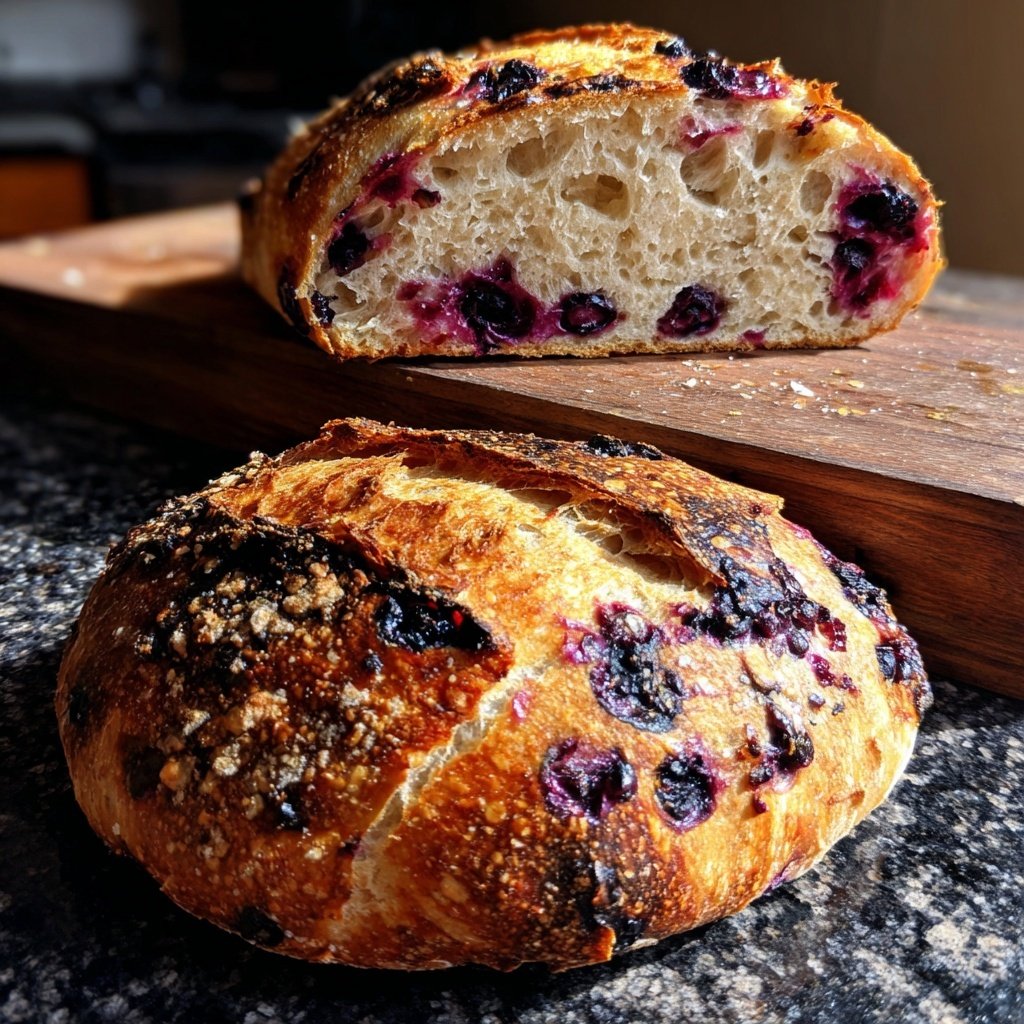
Why You'll Love This Recipe
- Bursting with fresh blueberries and a hint of lemon zest
- Delightfully chewy crust with a soft, moist interior
- Perfect for breakfast, snacks, or a warm treat anytime
Understanding Sourdough Fermentation
Fermentation is the heart of sourdough baking, and it’s crucial for developing the unique flavor and texture of your bread. During the first fermentation stage, you're allowing wild yeast and bacteria from the sourdough starter to thrive. It’s essential to cover your bowl with a damp cloth to maintain moisture, resulting in a dough that is elastic and pliable, which you will notice while kneading. This stage should last about 4 hours at room temperature, but you can extend it if your environment is cooler, up to 6 hours, ensuring proper rise and flavor development.
Performing stretch and folds every hour encourages gluten development while creating a nice structure for your dough. For each stretch and fold, gently lift the dough from one side, stretch it upward, and fold it over itself. Rotate the bowl a quarter turn and repeat. This method strengthens the dough without overworking it, yielding an airy, chewy crumb that perfectly complements the tender blueberries.
Incorporating Ingredients for Flavor
When it’s time to add the blueberries, lemon zest, and juice, do so gently to avoid smashing the delicate berries. Incorporating them requires a careful folding technique to maintain the air bubbles formed during fermentation. If you crush the blueberries, you risk losing their juice, which could lead to a soggy loaf. Mixing by hand allows you to feel the texture and will help you ensure that the blueberries are evenly distributed while keeping their integrity intact.
The addition of lemon not only brightens the flavor but also enhances the bread's aroma, making each slice a sensory delight. If you prefer a milder lemon flavor, consider reducing the zest to half or using just the juice. For a twist, you could substitute with other berries such as raspberries or cranberries, adjusting the sugar level slightly depending on the sweetness of the fruit.
Baking and Cooling Tips
Preheating your Dutch oven before adding the dough is vital for achieving that coveted crispy crust. Place it in the oven for at least 30 minutes at 450°F (230°C) to ensure that it is piping hot. This helps the bread rise rapidly in the first few minutes of baking—a process known as oven spring—creating a beautiful dome and a chewy, golden crust. If you don’t have a Dutch oven, an enclosed baking setup can be created with a baking stone and a tray of water below to trap steam.
Once out of the oven, resist the temptation to slice immediately! Letting the bread cool on a wire rack for at least 30 minutes allows the interior to set properly, preventing a gummy texture. If stored correctly, this bread will stay fresh for up to 3 days at room temperature. For longer storage, consider freezing the loaf in a well-sealed bag, and simply toast slices as needed for a quick and delightful treat.
Ingredients
For the Dough
- 500g bread flour
- 300ml water
- 100g active sourdough starter
- 10g salt
For Flavor
- 200g fresh blueberries
- Zest of 1 lemon
- Juice of 1 lemon
Make sure all ingredients are at room temperature for best results.
Instructions
Prepare the Dough
In a large bowl, combine the bread flour and water. Stir until fully mixed, then add the sourdough starter. Knead the mixture for about 5-7 minutes until smooth.
Fermentation
Cover the bowl with a damp cloth and let it rest for 4 hours at room temperature. Perform stretch and fold every hour.
Add Flavors
After 4 hours, gently fold in the blueberries, lemon zest, and lemon juice. Be careful not to crush the blueberries.
Shape the Dough
Shape the dough into a round or oval loaf. Place it in a floured proofing basket and cover with cloth. Let it proof for another hour.
Preheat the Oven
Preheat your oven to 450°F (230°C) with a dutch oven inside for 30 minutes.
Bake the Bread
Carefully transfer the dough to the dutch oven and cover with the lid. Bake for 30 minutes with the lid on, then remove the lid and bake for an additional 15 minutes.
Cool and Enjoy
Remove the bread from the oven and let it cool on a wire rack for at least 30 minutes before slicing.
Enjoy your delicious Blueberry Lemon Sourdough Bread fresh or toasted.
Pro Tips
- For best flavor, use organic blueberries and fresh lemons. Adjust the amount of blueberries based on your preference.
Variations and Customizations
For a delightful twist on flavor, consider adding spices like cinnamon or nutmeg along with the zest. This can complement the fruity notes and add warmth, making it an ideal bread for the colder months. Alternatively, you could fold in nuts, such as walnuts or pecans, providing a crunchy contrast to the soft texture of the bread while bringing additional nutritional benefits.
If you're feeling adventurous, try substituting part of the bread flour with whole wheat flour for a nuttier flavor and a denser texture. Keep in mind that the hydration may need slight adjustments, so start with 10-15% less whole wheat flour substitute if you notice the dough is too stiff.
Troubleshooting Common Issues
If your bread isn't rising as expected, it might be worth checking the health of your sourdough starter. Make sure it's active and bubbly before use; you can do this by performing a float test. If a small spoonful of the starter floats in water, it’s ready to go. If it sinks, try feeding it fresh flour and water and wait for it to become bubbly again before reusing.
If you end up with a dense loaf that didn’t rise adequately in the oven, consider revisiting your stretching and folding technique during fermentation. Also, the water temperature can impact yeast activity; ensure that it’s around room temperature, ideally between 70°F to 80°F (21°C to 27°C) for best results.
Questions About Recipes
→ Can I use frozen blueberries?
Yes, frozen blueberries can be used, but they may release more moisture during baking.
→ How do I know when my bread is done baking?
The bread should be a deep golden brown, and when tapped on the bottom, it should sound hollow.
→ Can I make this recipe gluten-free?
A gluten-free flour substitute may work, but it will alter the texture and rise of the bread.
→ How do I store leftover bread?
Store the bread in a paper bag at room temperature or freeze it for longer storage.
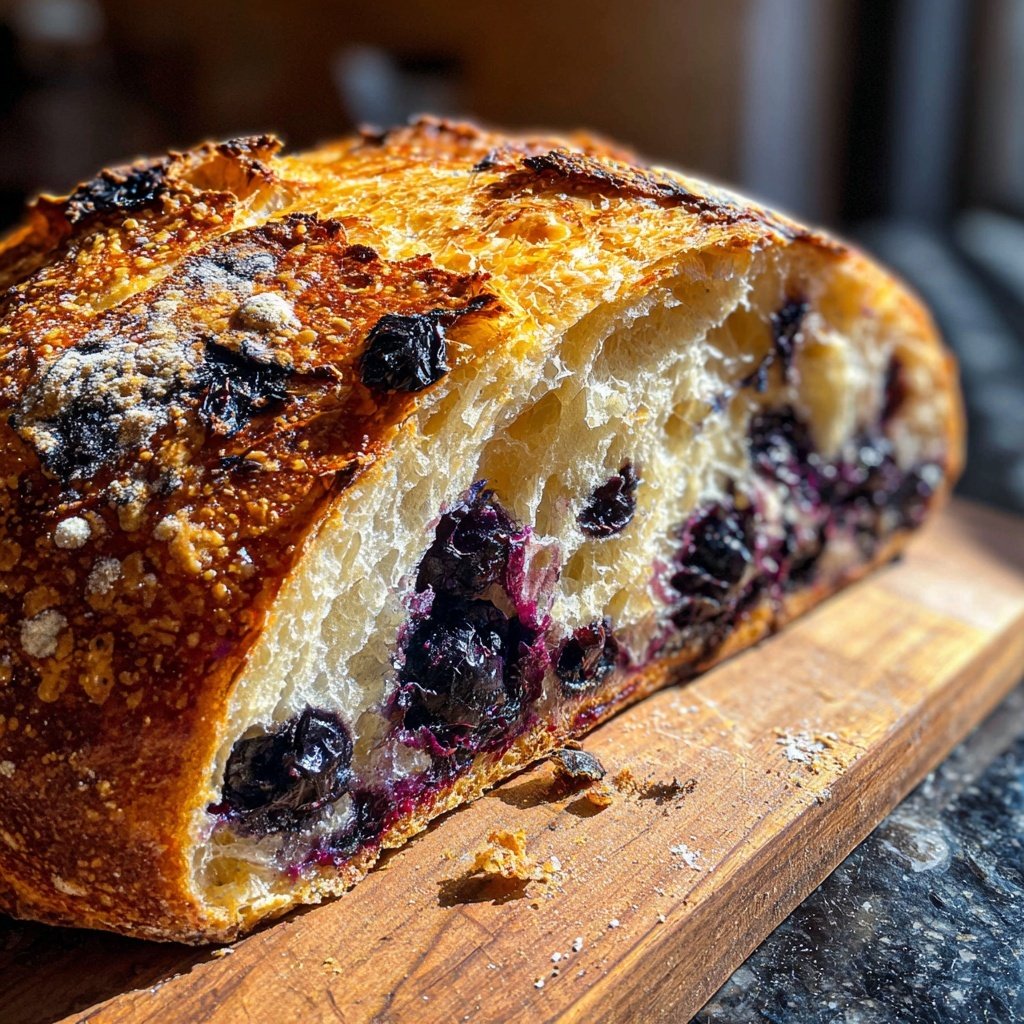
Blueberry Lemon Sourdough Bread From Scratch
Created by: Rowena Clarke
Recipe Type: Delightful Bakes
Skill Level: Intermediate
Final Quantity: 1 loaf
What You'll Need
For the Dough
- 500g bread flour
- 300ml water
- 100g active sourdough starter
- 10g salt
For Flavor
- 200g fresh blueberries
- Zest of 1 lemon
- Juice of 1 lemon
How-To Steps
In a large bowl, combine the bread flour and water. Stir until fully mixed, then add the sourdough starter. Knead the mixture for about 5-7 minutes until smooth.
Cover the bowl with a damp cloth and let it rest for 4 hours at room temperature. Perform stretch and fold every hour.
After 4 hours, gently fold in the blueberries, lemon zest, and lemon juice. Be careful not to crush the blueberries.
Shape the dough into a round or oval loaf. Place it in a floured proofing basket and cover with cloth. Let it proof for another hour.
Preheat your oven to 450°F (230°C) with a dutch oven inside for 30 minutes.
Carefully transfer the dough to the dutch oven and cover with the lid. Bake for 30 minutes with the lid on, then remove the lid and bake for an additional 15 minutes.
Remove the bread from the oven and let it cool on a wire rack for at least 30 minutes before slicing.
Extra Tips
- For best flavor, use organic blueberries and fresh lemons. Adjust the amount of blueberries based on your preference.
Nutritional Breakdown (Per Serving)
- Calories: 280 kcal
- Total Fat: 4g
- Saturated Fat: 0.5g
- Cholesterol: 0mg
- Sodium: 5mg
- Total Carbohydrates: 60g
- Dietary Fiber: 3g
- Sugars: 8g
- Protein: 7g